



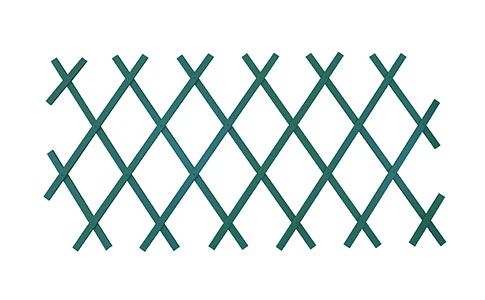













Growing climbing plants in containers is an excellent way to bring more greenery, flowers, and vertical interest to balconies, patios, terraces, gardens, and indoor spaces. Unlike plants that naturally grow outward or remain close to the ground, climbing plants often need a stable structure that allows their stems and vines to grow upward. A well-designed flower pot trellis provides this support while also becoming an attractive part of the overall plant display.
Container gardening has become particularly useful in areas where garden space is limited. Apartments, balconies, small patios, and urban homes may not have enough ground space for traditional garden trellises. A trellis installed directly in a plant pot allows gardeners to take advantage of vertical space without requiring a permanent garden structure. Container-grown vines can be used to create decorative displays while making efficient use of limited floor space.
The right trellis should not only look attractive but also match the plant, pot, growing environment, and expected mature size. Some vines wrap around supports naturally, while others use tendrils or need to be guided and tied to the framework. Therefore, choosing the appropriate support is an important part of successful container gardening.

A trellis for potted plants provides a framework that encourages climbing plants to grow vertically instead of spreading across the ground or surrounding areas. This can be particularly helpful when growing vines in small spaces.
One of the biggest advantages is space efficiency. A traditional garden bed requires horizontal space for plants to spread, while a container trellis encourages vertical growth. This makes it possible to create a taller and fuller plant display without significantly increasing the footprint of the container.
Climbing plants can also benefit from having a defined support structure. Depending on the species, vines may use tendrils, twining stems, or other natural structures to attach themselves to supports. Some plants may need gardeners to gently guide their new growth through the trellis or secure stems with soft plant ties.
A trellis can also improve the overall appearance of a container garden. Instead of allowing vines to become tangled or spread randomly, the structure gives them a defined growing direction. As the plant develops, leaves and flowers can gradually cover the framework, creating a natural vertical display.
For balconies and patios, this can be particularly attractive. Several containers with climbing plants can create a green backdrop, decorative screen, or small vertical garden. The arrangement can also be changed or moved more easily than a permanent garden trellis.
When choosing a trellis for potted plants gardeners should first consider the plant's growth habit. Clematis, sweet peas, morning glory, jasmine, certain roses, and some vegetable vines can all benefit from appropriate support, but their climbing methods and mature sizes can be very different.
The container itself is equally important. A climbing plant becomes heavier as it grows, and the trellis adds additional weight above the pot. If the pot is too small or lightweight, the complete arrangement may become unstable, particularly in windy outdoor locations. A suitable container should therefore provide enough weight and stability for the plant and trellis combination.
The trellis should also be installed carefully. It is generally better to place the support in the container before the plant develops an extensive root system. The structure should be firmly anchored without unnecessarily disturbing major roots.
Material is another consideration. Metal trellises can provide strength and durability, while bamboo and wood offer a more natural appearance. Plastic designs are lightweight and can be suitable for smaller indoor or balcony containers. The best choice depends on the plant, environment, expected lifespan, and aesthetic requirements.
Not every container plant requires the same size of support. Choosing the correct height and structure is essential because a trellis that is too small may quickly become inadequate, while an oversized trellis can make a small container unstable.
A mini trellis for potted plants is suitable for compact plants and smaller containers. It can be used for young vines, small flowering plants, herbs with climbing habits, and decorative indoor plants. Mini trellises are also popular for windowsills, tabletops, balconies, and other areas where space is limited.
The main advantage of a mini trellis is its compact size. It provides support without overwhelming the plant or container. Decorative designs such as arches, hearts, grids, and geometric patterns can also add visual interest.
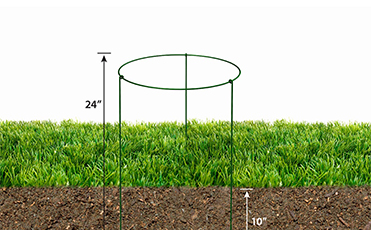
A small trellis for potted plants provides slightly more growing space while remaining suitable for compact containers. It can be a practical choice for plants that are expected to grow moderately but do not require a large garden structure.
When selecting a small trellis, gardeners should consider the plant's future growth rather than only its current size. A young vine may appear small when first planted but can grow rapidly during the growing season. Choosing a support with some additional capacity can reduce the need for replacement later.
For vigorous climbers, a tall trellis for potted plants may be more appropriate. Taller structures provide additional vertical growing space and can help guide long stems upward. They are particularly useful when gardeners want to create a dramatic vertical display on patios, balconies, terraces, or larger garden containers.
However, taller does not always mean better. As the trellis becomes taller and the plant develops more foliage, the entire structure can become more top-heavy. Container stability therefore becomes increasingly important. Extension gardening guidance specifically recommends selecting support according to the vigor of the plant and ensuring that the support is firmly anchored because larger vines can make containers more susceptible to tipping in windy conditions.
The relationship between the pot and trellis should therefore be considered as one system.
A wide, heavy container is generally more suitable for a tall support than a narrow, lightweight pot. The soil and root mass also contribute to the stability of the arrangement. For exposed balconies or windy patios, gardeners should pay particular attention to the combined height, weight, and center of gravity.
The spacing of the trellis framework is another important factor. Plants that climb with small tendrils may benefit from relatively narrow support points, while plants with larger stems may require stronger and more widely spaced structures. Rougher support surfaces can also provide better gripping opportunities for some climbing plants than very smooth surfaces.
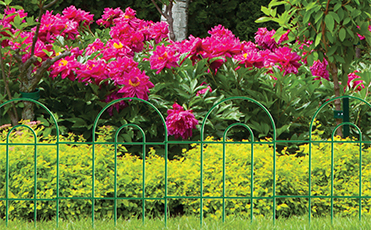
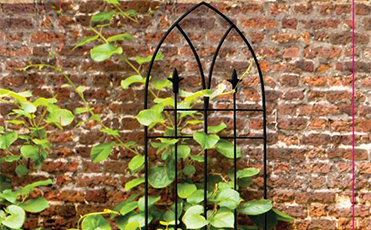
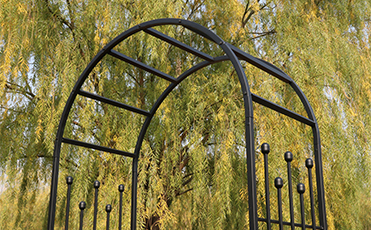
Gardeners should also consider whether the trellis is intended primarily for function or decoration. A simple wire grid may provide effective support, while an ornamental metal arch or obelisk can become a central feature of the container garden.
A pot trellis for climbing plants should be selected according to the plant's growth habit, container size, environment, and intended appearance. There is no universal trellis that works equally well for every climbing plant.
For example, some climbing plants naturally twine around thin supports, while others use tendrils to attach themselves to a framework. Plants such as climbing roses may require additional guidance because they do not attach to a trellis in the same way as true twining vines. Understanding how the plant climbs makes it easier to select the appropriate support structure.
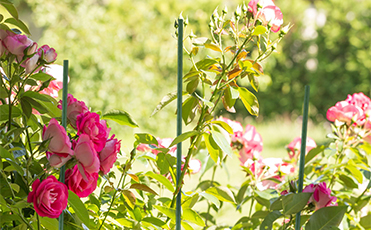
For flowers, a decorative trellis can help display blooms at different heights. Clematis, sweet peas, jasmine, and other container-friendly climbers can create attractive vertical displays when given suitable support. Several climbing species can be successfully grown in containers when the pot is appropriately sized and the growing conditions match the plant's needs.
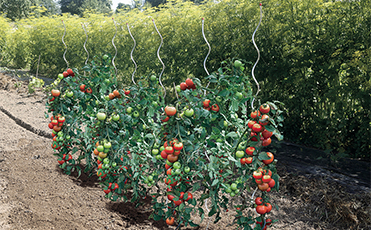
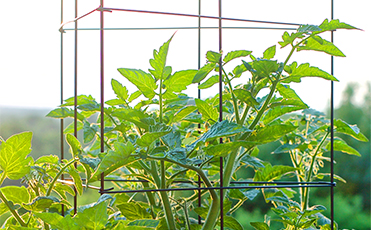
For edible plants, trellises can support certain beans, peas, cucumbers, and compact climbing vegetables. Vertical growing can make better use of limited garden space and may also make it easier to observe and harvest developing produce.
For balconies, a compact trellis for climbing plants in pots can create a green vertical feature without taking up much floor area. Multiple pots can be arranged along a balcony edge to form a natural-looking screen. Because container gardens are portable, gardeners can also reposition individual pots according to sunlight, season, or available space.
When choosing a trellis for outdoor use, durability is important. Metal structures may be preferred where stronger support is required, while treated wood or bamboo can provide a natural garden appearance. For long-term outdoor use, buyers should consider corrosion resistance, weather exposure, connection quality, and structural stability.
A good flower pot trellis should also be easy to install and maintain. Some designs can simply be inserted into the potting soil, while others may be attached to the container or combined with a planter. The installation method should provide enough stability without interfering with normal watering or plant maintenance.
As the plant grows, regular training may be necessary. New shoots can be gently guided through the framework so that growth is distributed across the available support. Soft ties can be used when necessary, but they should not be tightened around expanding stems. Regular pruning can also help maintain the desired shape and prevent excessive weight from accumulating on one side of the trellis.
Watering and drainage should not be overlooked. Dense foliage can make it harder to see the soil surface, so gardeners should check soil moisture carefully rather than relying only on appearance. The container should also have appropriate drainage for the specific plant.
Ultimately, selecting a trellis for climbing plants in pots is about creating a balanced growing system. The plant, pot, trellis, soil, and growing environment should work together.
A mini trellis for potted plants can provide an attractive solution for compact indoor plants and small containers, while a small trellis for potted plants offers additional support for moderately sized vines. For vigorous climbers, a tall trellis for potted plants can provide the vertical space needed for continued growth, provided that the container is sufficiently stable.
A well-selected flower pot trellis can transform an ordinary container into a productive and attractive vertical garden. By understanding the plant's climbing habit, choosing the right trellis size, and ensuring that the container provides adequate stability, gardeners can successfully grow climbing flowers, decorative vines, and selected edible plants in relatively small spaces.
Whether used on a balcony, patio, terrace, windowsill, greenhouse, or garden, the right trellis provides more than simple support. It helps organize plant growth, makes better use of vertical space, improves the visual presentation of flowers and foliage, and can turn container gardening into a more creative and rewarding experience.



Copyright © 2026 Hebei Minmetals Co., Ltd. All Rights Reserved. Sitemap | Privacy Policy | Top Blog | Top Topic丨Menu