























































Efficient storage is an important part of warehouse management, manufacturing, logistics, retail, and many industrial operations. As businesses handle increasing quantities of products, components, tools, spare parts, and materials, having a reliable storage solution can make daily operations more organized and efficient. Wire mesh storage containers are widely used because they combine strength, visibility, ventilation, and convenient handling in one practical storage system.
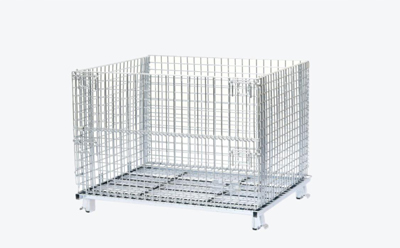
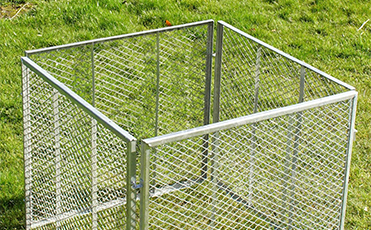
Unlike solid storage boxes, mesh containers are constructed with metal wire panels that create an open structure. This design allows users to see the contents without opening the container, making it easier to identify products and manage inventory. At the same time, the metal construction provides the strength required for industrial storage and transportation.
There are many types of mesh storage containers available for different applications. Some are designed for heavy-duty warehouse storage, while others are suitable for parts organization, production lines, retail stockrooms, and logistics operations. Depending on the application, businesses can choose fixed, stackable, collapsible, or folding designs.
A wire mesh container can also help businesses make better use of available storage space. When containers are properly arranged and stacked, vertical warehouse space can be used more efficiently. Collapsible models offer an additional advantage because they can be folded when empty, reducing the space required for storage and return transportation.

Strength is one of the most important characteristics of industrial storage containers. Warehouses and manufacturing facilities often need to store heavy components, metal parts, tools, raw materials, and other products. A suitable container needs to withstand the weight of its contents while maintaining its structural stability during handling.
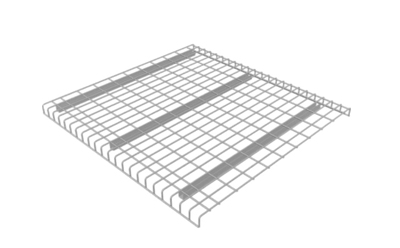
A wire mesh container is normally constructed from steel wire or metal components that form a rigid frame and mesh panels. The frame provides structural support, while the mesh sides create an open storage area. Depending on the design, reinforced corners and stronger bases can increase the container's ability to handle heavier loads.
One major advantage of wire mesh storage containers is visibility. The open mesh structure allows workers to identify the contents from outside. This can reduce the time spent opening multiple containers when searching for specific products or components. Better visibility can also help improve inventory management and reduce the possibility of misplaced items.
Ventilation is another useful feature. Air can circulate through the open mesh panels, making these containers suitable for materials that benefit from airflow. Compared with completely enclosed boxes, mesh containers can help reduce the accumulation of moisture around stored goods in appropriate environments.
The open design also makes cleaning and inspection easier. Dust, small debris, and other particles can pass through the mesh instead of remaining trapped inside a completely enclosed container. Workers can inspect both the container and its contents more easily.
For smaller components, wire mesh baskets can be a practical choice. Their compact structure makes them suitable for organizing screws, fasteners, tools, machine components, hardware, and other small items. Baskets can be placed on shelves, workbenches, carts, or storage racks for easy access.
Wire mesh bins offer another useful solution for parts organization. They can be used in workshops, factories, warehouses, and maintenance areas where employees need quick access to frequently used materials. Different sizes of bins can be combined to organize products according to type, size, or application.
Another important feature is stackability. Many industrial containers are designed so that multiple units can be stacked securely when loaded. This can help businesses make better use of vertical storage space and reduce the amount of floor area required.
The exact load capacity and stacking height depend on the container's material, dimensions, construction, and manufacturer specifications. Buyers should therefore select containers according to the actual weight and type of goods they need to store.
Space efficiency is especially important in warehouses and logistics operations. Empty containers can occupy significant amounts of storage space, particularly when large quantities are returned from customers or transported between facilities. Collapsible designs provide a practical solution to this problem.
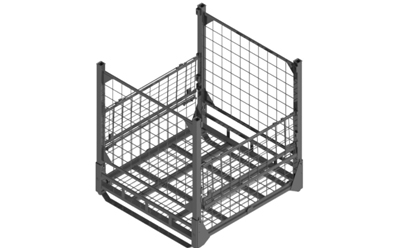
A collapsible wire container can be folded or collapsed when it is not being used. Once collapsed, its overall volume is significantly reduced compared with an assembled container. This allows businesses to store more empty containers in a smaller area.
The same principle applies to a folding wire container. When the container is needed, the panels can be opened and secured into their working position. After the contents have been removed, the container can be folded down for storage or transportation.
This feature can provide major advantages for logistics operations. Empty containers often need to travel back to a warehouse, supplier, manufacturer, or distribution center. Transporting large quantities of empty rigid containers can use valuable truck or warehouse space. Folding containers can reduce the volume of empty units and potentially improve transportation efficiency.
Collapsible containers are also useful when warehouse demand changes. During busy periods, companies may need additional storage capacity. When demand decreases, empty containers can be collapsed and stored until they are needed again.
A collapsible wire container can also be useful in production environments. Components can be delivered to a workstation in the container, and once the materials have been consumed, the empty unit can be folded and moved away without occupying unnecessary floor space.
For warehouses with limited space, this flexibility can make a meaningful difference. Instead of dedicating a large area to empty storage containers, folded units can be arranged in compact stacks.
Another advantage is handling convenience. Many folding designs include access doors or drop-down sections that allow workers to retrieve goods without removing the entire contents. Depending on the specific design, containers may also be compatible with forklifts, pallet trucks, or other material-handling equipment.
The open mesh structure remains useful even when the container is being transported. Workers can quickly identify its contents, while the rigid metal frame helps protect products from impacts and compression during normal handling.
When selecting a folding wire container, buyers should examine the folding mechanism carefully. It should be simple to operate while remaining secure during use. The hinges, locking points, frame, and base should all be suitable for the expected load and handling conditions.
Different industries have different storage requirements, so choosing the right container depends on the type of goods, available space, handling method, and frequency of use.
For large industrial components, heavy-duty wire mesh storage containers can provide the necessary structural support. They are commonly suitable for metal parts, machine components, tools, automotive parts, industrial products, and other heavy materials.
For smaller products, wire mesh bins and wire mesh baskets may be more appropriate. Their smaller size makes it easier to organize individual components and maintain an efficient workstation. Businesses can assign different bins to different product categories, reducing confusion and improving picking efficiency.
For general warehouse storage, mesh storage containers can provide a balance between visibility and durability. Workers can identify products quickly without opening each container, which can help improve inventory checks and daily warehouse operations.
For logistics and returnable packaging, a collapsible wire container can provide significant space-saving benefits. Once products have been delivered, the empty container can be collapsed and returned. This makes it especially useful in supply chains where containers repeatedly move between manufacturers, warehouses, distributors, and customers.
A folding wire container can serve a similar purpose while providing convenient storage when not in use. Businesses should consider the frequency of folding and unfolding when selecting a model, as high-use applications require reliable mechanisms and durable construction.
The size of the container should also match the products being stored. A container that is too large may waste space, while a container that is too small may create inefficient stacking or require excessive handling. Measuring the storage area and the products in advance can help determine the appropriate dimensions.
Load capacity is another critical consideration. Heavy products require stronger frames and reinforced bases. Buyers should always check the manufacturer's rated load capacity rather than estimating the container's strength based only on its appearance.
Surface treatment can also affect durability. Since metal containers may be exposed to warehouse environments, transportation, humidity, and occasional outdoor conditions, corrosion-resistant finishes can help extend their service life. The appropriate finish depends on the operating environment.
Accessibility should also be considered. Containers with convenient openings can make it easier for workers to retrieve products. For frequently accessed components, wire mesh baskets or wire mesh bins positioned at an ergonomic height can improve workplace efficiency.
For facilities using forklifts, compatibility with material-handling equipment is particularly important. The container should be designed for safe lifting and movement according to its specifications.
Ultimately, the best storage solution depends on the specific application. Wire mesh storage containers are suitable for larger and heavier goods, while wire mesh bins and wire mesh baskets can help organize smaller parts. Collapsible wire containers and folding wire containers provide additional flexibility when storage and transportation space are limited.
By selecting the right combination of size, load capacity, accessibility, stacking capability, and folding function, businesses can create a more organized and efficient storage system. The durability and visibility of a wire mesh container can simplify inventory management, while the space-saving characteristics of a collapsible wire container can improve logistics efficiency.
Whether used in manufacturing, warehousing, logistics, automotive production, retail, or maintenance operations, metal mesh storage products provide a practical alternative to conventional solid containers. With proper selection and use, they can help businesses organize products more effectively, improve material handling, reduce wasted space, and support smoother daily operations.



Copyright © 2026 Hebei Minmetals Co., Ltd. All Rights Reserved. Sitemap | Privacy Policy | Top Blog | Top Topic丨Menu