In the world of trailers—whether for hauling cargo, recreational gear, or industrial equipment—trailer spindles are the unsung heroes that ensure smooth, safe operation. These critical parts connect wheel hubs to axles, bearing the weight of the trailer and its load while enabling friction-free wheel rotation. Whether you’re repairing a worn trailer, building a custom one, or stocking parts for a business, understanding trailer spindle types, sourcing trailer spindles for sale, and selecting the right trailer axle spindle (including the popular 84 spindle) is key to maintaining reliability on the road.
Trailer spindles are precision-engineered steel components that serve as the bridge between a trailer’s axle and its wheels. Without properly functioning spindles, wheels can wobble, bearings can fail, and even minor towing incidents can escalate into safety hazards. High-quality trailer spindles are crafted from durable, heat-treated steel to withstand heavy loads, vibration, and exposure to the elements—from road salt in winter to mud and debris in off-road conditions. They come in standardized designs to fit common axle weights (ranging from 1,000 lbs for small utility trailers to 10,000 lbs for heavy-duty industrial models) and are compatible with specific wheel bearings, which are critical for reducing friction. For example, a 3,500-lb axle typically pairs with a spindle designed for L68149 inner bearings and L44649 outer bearings, ensuring a snug fit that prevents excessive wear. Whether you’re a DIY trailer owner or a professional mechanic, investing in well-made trailer spindles is non-negotiable—they directly impact towing stability, fuel efficiency, and the lifespan of your trailer’s wheel system.
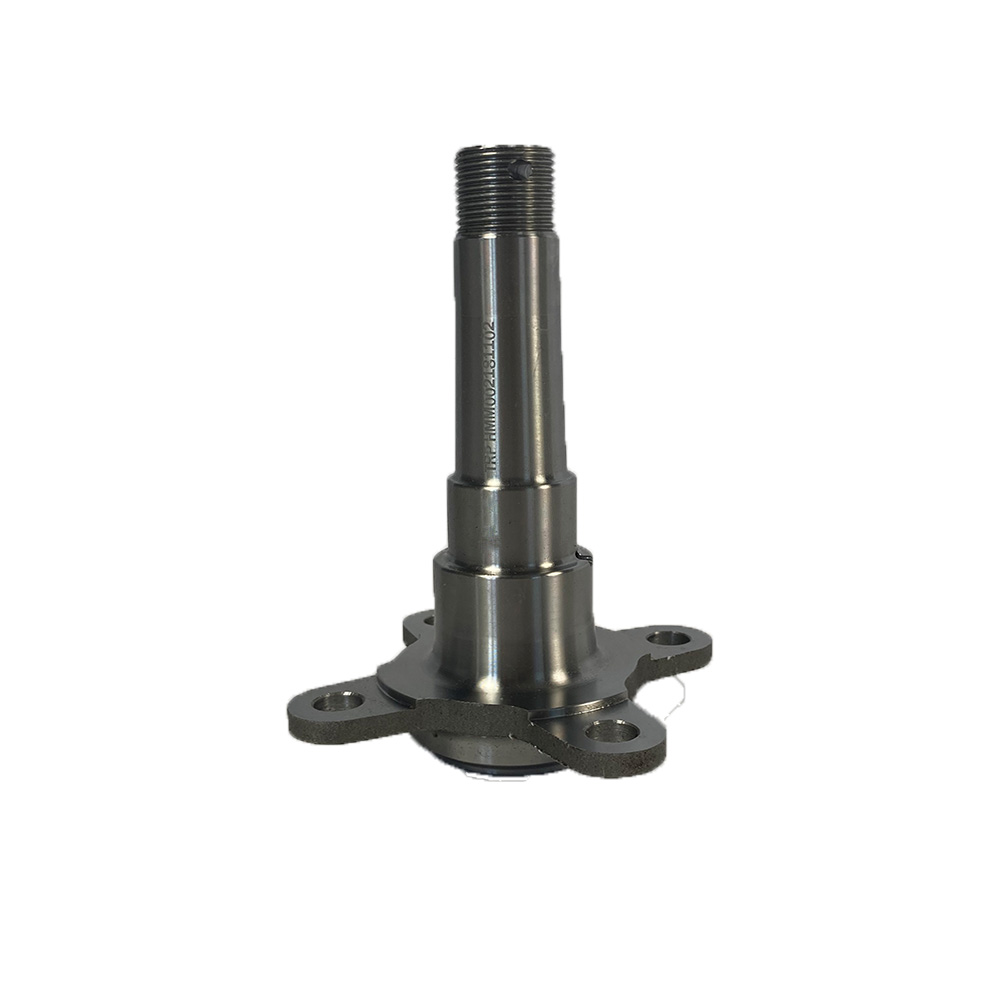
Trailer spindle types are categorized by their design, load capacity, and maintenance features, ensuring there’s a solution for every trailer application. The most common type is the standard weld-on spindle, which is fused directly to the axle and works for most residential and light commercial trailers (e.g., utility trailers, small campers). These spindles are cost-effective and easy to install for those with welding experience, making them a go-to for quick repairs. Another popular option is the E-Z Lube spindle, which includes a grease zerk (a small fitting) that allows for easy bearing lubrication without disassembling the wheel hub—ideal for those who want to reduce maintenance time and extend bearing life. For heavier loads, there are heavy-duty spindles, often made from thicker steel and designed for axles rated 7,000 lbs or more, suitable for industrial trailers or those hauling construction equipment. Additionally, square spindles (with a square cross-section) offer extra stability for specific axle designs, while tapered spindles (with a gradually narrowing diameter) improve aerodynamics for high-speed towing, such as racing trailers. Understanding trailer spindle types ensures you don’t just “replace” a spindle—you select one that aligns with your trailer’s weight, usage, and maintenance preferences.
The 84 spindle is one of the most widely used trailer spindle types, specifically designed for 3,500-lb axles—the workhorse of utility trailers, pop-up campers, and small cargo trailers. What makes the 84 spindle stand out is its compatibility with standard bearing sets (L68149 inner, L44649 outer) and its adaptability to different maintenance needs: it’s available in both standard and E-Z Lube versions. Standard 84 spindle models come with essential hardware (castle nut, washer, cotter pin) for secure wheel hub installation, while E-Z Lube variants add a grease zerk to simplify lubrication. Most 84 spindle options also feature a brake flange, a flat metal surface that allows for the attachment of drum or disc brakes—critical for trailers that need extra stopping power when hauling heavy loads (e.g., landscaping equipment, small boats). The 84 spindle typically has a 2-inch diameter at the bearing seat, ensuring a tight fit with common hub assemblies, and is constructed from hot-rolled steel to resist bending or warping under stress. Whether you’re replacing a worn spindle on a 3,500-lb trailer or building a custom one, the 84 spindle is a reliable, cost-effective choice that meets industry standards for safety and performance.
A trailer axle spindle is not a one-size-fits-all component—it must be perfectly matched to the axle’s weight rating, diameter, and mounting style to function safely. The first rule of selecting a trailer axle spindle is to match its load capacity to the axle’s rating: a spindle rated for 3,500 lbs will fail if installed on a 5,200-lb axle, leading to bearing damage or even wheel detachment. You also need to consider the axle’s diameter—for example, a 2.5-inch diameter axle requires a trailer axle spindle with a corresponding mounting size to ensure a secure weld. Additionally, the spindle’s “journal length” (the part where the bearing sits) must align with the hub’s depth; too short, and the bearing won’t seat properly; too long, and it can cause excess friction. For those unsure about compatibility, most trailer axle spindle suppliers provide a “spindle measurement guide” that helps you match the spindle to your axle by measuring the bearing seats, hub depth, and axle diameter. Remember: a mismatched trailer axle spindle isn’t just a maintenance issue—it’s a safety risk, so taking the time to verify compatibility is essential.
When searching for
trailer spindles for sale, you have several reliable options to ensure you get genuine, durable parts. Online retailers and Southwest Wheel offer a wide selection of
trailer spindles for sale, including standard models, E-Z Lube variants, and specialty types like the
84 spindle. These platforms provide detailed product descriptions (load capacity, bearing compatibility, hardware included) and customer reviews, making it easy to compare options from home. For those who prefer in-person shopping, local trailer repair shops often stock common
trailer spindles for sale (e.g.,
84 spindle, standard weld-on models) and can offer expert advice on compatibility—many even provide installation services if you’re not comfortable welding. Agricultural and industrial supply stores (e.g., AgriSupply) are another great source, especially for heavy-duty
trailer spindles for sale designed for farm trailers or construction equipment. When buying
trailer spindles for sale, always prioritize suppliers that offer warranties (e.g., 1-year defect coverage) and source parts from reputable manufacturers—avoid generic, unbranded spindles, as they may not meet safety standards and can fail prematurely.
Signs of a worn or damaged spindle include wheel wobble (even when the trailer is parked), unusual noises (grinding, squealing) from the wheels while towing, uneven tire wear, or visible rust/corrosion on the spindle’s bearing seats. If you notice any of these, inspect the spindle immediately—delaying replacement can lead to bearing failure or wheel loss.
If you have experience with welding and basic trailer maintenance, you can install a standard weld-on trailer axle spindle yourself: clean the axle surface, align the spindle, and weld it using a MIG or TIG welder (ensuring a strong, even bond). For E-Z Lube spindles or heavy-duty models, or if you lack welding skills, hire a professional—poor installation can cause the spindle to detach while towing.
The 84 spindle is compatible with most 3,500-lb axles, but always verify the axle’s diameter and bearing requirements first. Most 3,500-lb axles use the L68149/L44649 bearing set (matching the 84 spindle), but some older or custom axles may have different specs. Use a caliper to measure the axle’s diameter (the 84 spindle fits 2-inch axles) and confirm bearing compatibility with the manufacturer.
A standard spindle requires you to disassemble the wheel hub (remove the hub, bearings, and seal) to lubricate the bearings, which takes time and requires mechanical skill. An E-Z Lube spindle has a grease zerk that lets you inject grease directly into the bearing cavity without disassembly—great for those who want to reduce maintenance time and keep bearings lubricated more frequently.
For affordable, quality trailer spindles for sale, start with online retailers (which often runs sales on common models like the 84 spindle) or Southwest Wheel (which offers bulk discounts for businesses). Local trailer shops may also have discounted “open-box” spindles for common sizes, and agricultural supply stores often price-match to stay competitive. Always check for warranties—even affordable spindles should come with a 6-month to 1-year defect guarantee.
From selecting the right trailer spindle types to sourcing trailer spindles for sale and installing a trailer axle spindle (like the versatile 84 spindle), every step impacts your trailer’s safety and performance. By prioritizing compatibility, quality, and proper maintenance, you ensure your trailer remains reliable for years of towing—whether for work, recreation, or everyday use.